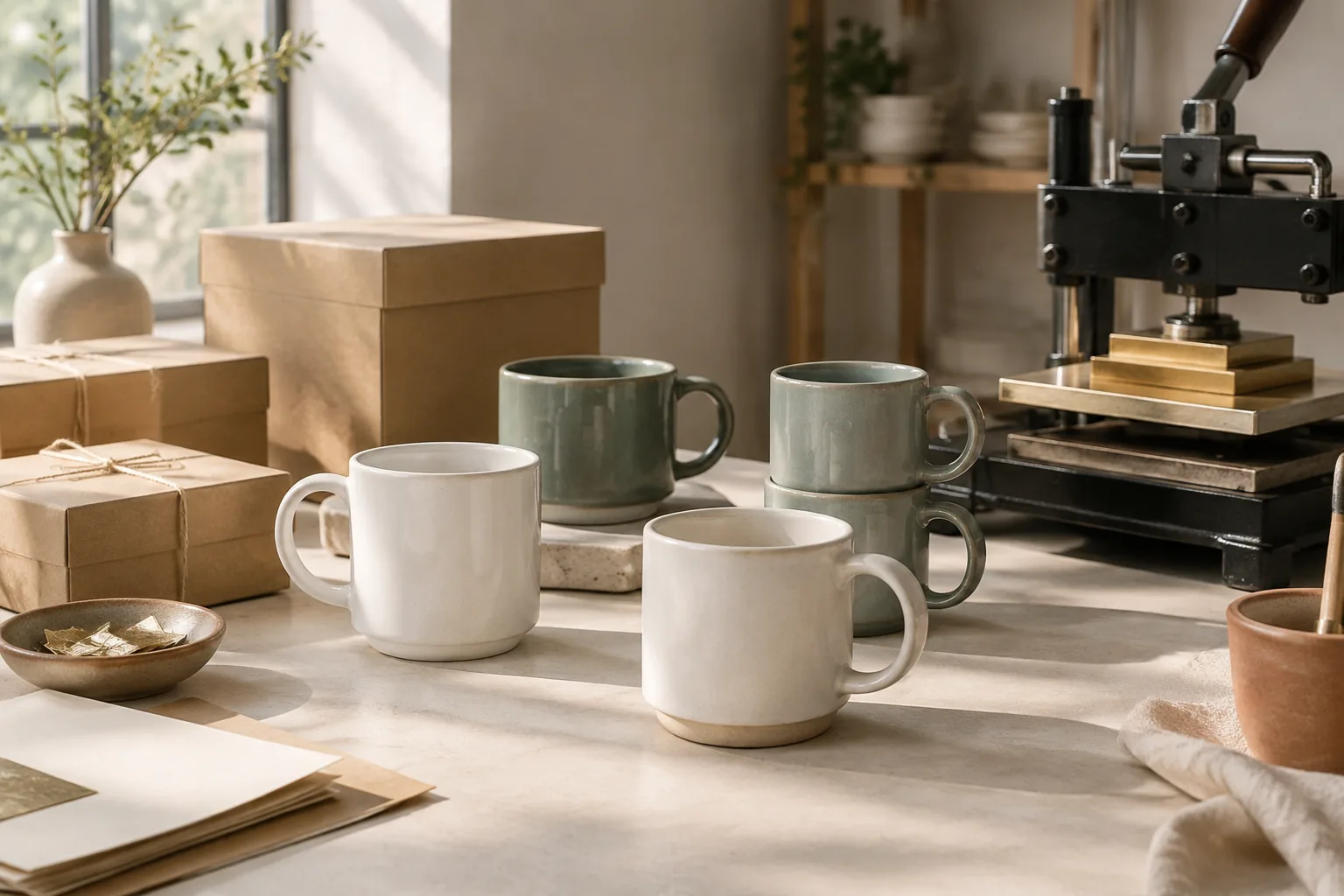
OEM and ODM sound like acronyms in search of a difference, but in ceramics they describe two genuinely different relationships with a factory: one where the factory's catalog carries your label, and one where your specification builds the product. Choosing the wrong depth for your stage wastes either money or differentiation. This article puts both models on one page with a decision table, the risk map for each customization level, and the contract lines each one needs.
The question in the title is really about depth, not vocabulary. Ceramics customization is a ladder with five rungs, and "OEM vs ODM" is the shorthand for the two ends of it. Most successful brands live on rungs two through four, not at the extremes — and knowing which rung your current program actually occupies prevents both overpaying for differentiation you do not need and under-protecting a design you do.
The two models, defined in ceramics terms
ODM (original design manufacturer) means the factory designs the product; you select from its catalog and apply your brand. The forms, glazes and set compositions already exist and are often already in production. Your work is curation: choosing the range, the colorways and the packaging story. Volumes follow the stock logic — around 500 pieces per SKU is typical — and lead times are shortest because development has already happened, for someone else.
OEM (original equipment manufacturer) means the factory builds to your specification — your form or your developed glaze, made for you. Development effort moves to your side of the table: drawings, samples, correction loops, golden samples. Volumes follow the custom logic — a typical 1000–3000 pieces per SKU — because the factory is dedicating setup work to a product only you sell.
Between those poles sit the hybrid rungs where most private label programs actually operate.
The five rungs of customization
| Rung | What exists already | What you develop | Typical MOQ per SKU |
|---|---|---|---|
| 1. Resell stock | Everything | Nothing — pure distribution | 500 pcs or via wholesale stock |
| 2. Brand the stock | Form, glaze, decoration options | Logo application, packaging | 500 pcs typical |
| 3. Own the palette | Forms | Custom glaze color and finish, developed and banded | 1000–3000 pcs typical |
| 4. Modify a form | Base form and its tooling | Dimensional changes — footring, depth, handle — on existing molds | 1000–3000 pcs typical |
| 5. Full custom form | Nothing | Drawing to master model to production molds to golden sample | 1000–3000 pcs typical |
Rung three is the quiet favorite of experienced brand builders: a developed colorway on proven forms delivers visible identity at a fraction of rung five's tooling and timeline. Rung four is underused — a modified footring or a deepened bowl well can meaningfully improve function for a hospitality program without a full development project.
Decision table: which depth fits your situation
| Your situation | Sensible depth | Why |
|---|---|---|
| Testing a category for the first time | Rung 1–2 | Demand evidence before development spend; packaging alone can carry a launch |
| Brand with proven SKUs and repeat customers | Rung 3 | A proprietary colorway locks in recognition exactly where loyalty already exists |
| Hospitality group with functional requirements | Rung 3–4 | Stacking, rim profile and replacement logistics often need small form changes, not new designs |
| Design-led brand where the form is the story | Rung 5, selectively | Concentrate tooling on one or two hero forms; carry the rest of the line on open models |
| Wholesale distributor filling a range | Rung 1–2 | Breadth and availability beat exclusivity at distribution margins |
Where the risks live at each depth
Deeper customization does not simply mean "more risk" — it means different risk, and the risks move from your customers toward your contract.
- Rungs 1–2: the risks are commercial — thin margins, no exclusivity, competitors ordering the identical pieces next week. Mitigation lives in brand and channel, not paperwork.
- Rung 3: the risk is color drift between batches. Mitigation is the variation band and golden sample discipline, referenced in every purchase order.
- Rungs 4–5: the risks are contractual and technical — shape drift against the drawing, mold wear, correction loops consuming the calendar, and the design itself migrating into the factory's open catalog. Mitigation is written tooling and exclusivity terms, detailed below.
Write the depth into the pro forma invoice
The practical difference between a controlled custom program and a future dispute is what the PI says. Regardless of rung, three clauses earn their line count:
- Tooling ownership and release. For rungs 4–5, state who owns the molds, what a buyout costs, and that molds are released to you or a named kiln on request. Without this clause you cannot move production even if you paid for development.
- Exclusivity scope and term. Define exactly what is protected — the form, the glaze recipe, the decoration — in which markets, for how long, and what happens on expiry. Silence is how your hero form becomes a catalog item.
- Golden sample supremacy. The sealed sample and its measurement record govern acceptance on every reorder, in every case, ahead of any verbal description.
At rungs 1–2 these clauses matter less, which is itself useful information: the lighter your customization, the more your defensibility must come from brand, content and channel rather than from the supplier relationship.
A pragmatic way to decide this week
Lay your current line against the five rungs and ask two questions. First: which rung is each SKU actually on — not in your marketing, but in the factory's ledger? Second: is the differentiation that rung provides worth its specific risk, given how you actually win customers? Brands are usually surprised to find hero SKUs sitting at rung two with no protection, and long-tail SKUs at rung five burning capital that a stock form with their colorway would have served identically. Rebalance toward the rungs that match how each product earns money, and put the three clauses above into the PI for anything at rung three or deeper. Our OEM and ODM program quotes rungs side by side on one sheet so the trade-offs are explicit, and the product catalog shows the open-model base you can climb from. Whatever depth you choose, compliance travels with the product — the food-contact standards page covers the documents each market requires. For a side-by-side quotation at two depths of the same concept, send the brief and we will show both honestly.