
What Is a Golden Sample in Ceramics?
A golden sample is the fired, signed, sealed ceramic sample that both parties agree is the product. Every later decision — first article, inline checks, pre-shipment inspection, and whether your reorder matches — is made against that piece, not against a photo or a memory.
First article, golden sample, variation bands — in that order, in writing.
- First article (pre-production sample). Fired on the intended body and glaze before the mass run. You approve body color, glaze tone, wall, weight and decoration on real pieces — never on renders.
- Golden sample. The approved first article becomes the reference: one set sealed at the factory, one at your side. Every inspection gate compares production to this piece.
- Written variation bands. Ceramics vary by nature, so the specification states how much: acceptable tone range, decoration registration, dimension tolerances. If it is not written, it will be argued later.
- Re-issue on change. A new glaze batch, a new decoration supplier or a body change triggers a new golden sample — before the kiln, not after the container.
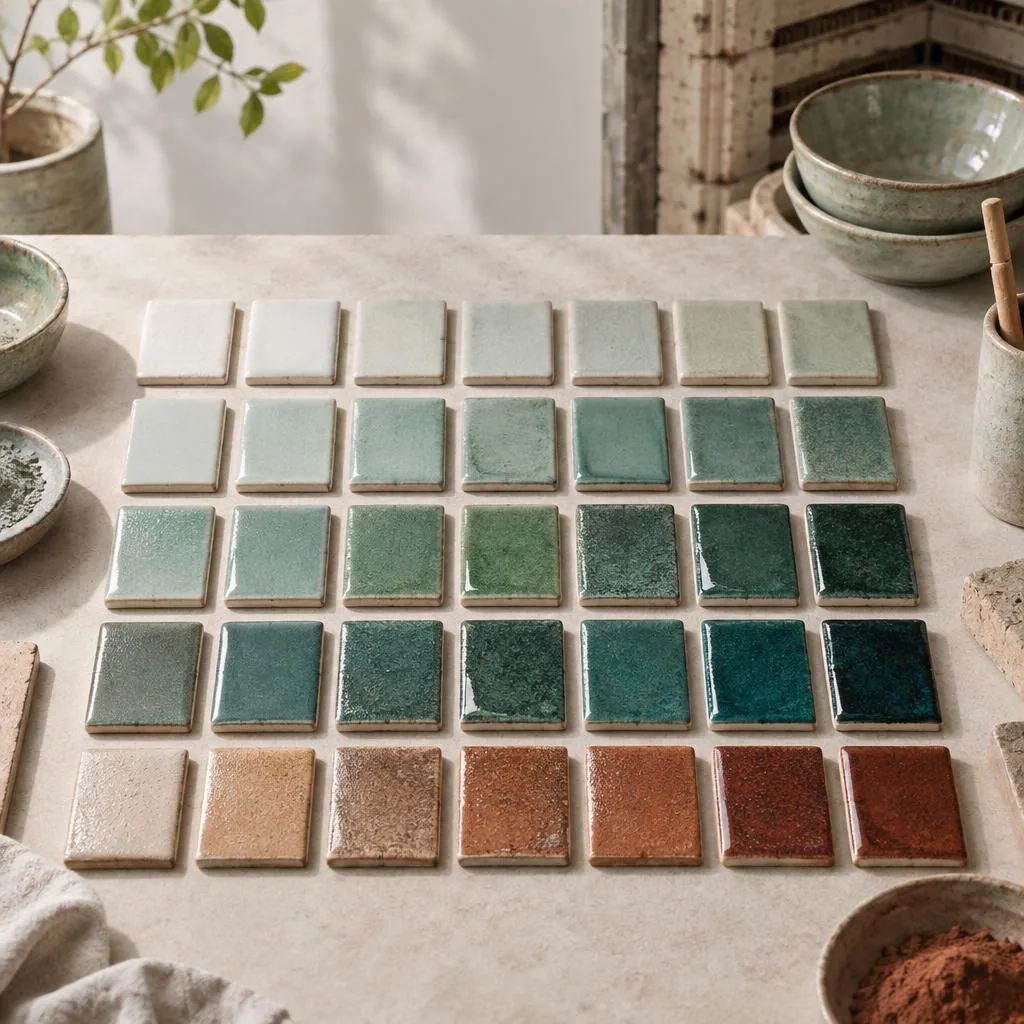
Ceramic glaze samples are how you buy variation on purpose.
Solid glazes and reactive glazes behave differently, so each needs its own band. Reviewing several ceramic glaze samples from the line — not one hero piece from the showroom — is what makes the band realistic.
| Glaze type | What varies naturally | How the band should read |
|---|---|---|
| Solid bright glaze (e.g. everyday white) | Very little piece to piece | Tight tone band; near-match between pieces and reorder expected |
| Reactive glaze stoneware (e.g. SKU FC-DW-02) | Tone shifts, flow patterns, edge pooling — each piece is unique | Band defined as a tone range plus pattern family; piece-match explicitly out of scope |
| Underglaze blue and hand-painted lines | Brush depth, motif placement | Registration band on position and color depth; character preserved |
Dishwasher and microwave suitability is stated per glaze type — the band and the care statement travel together in the specification.
What a sampling round costs, and where the days go.
A ceramic sample round has three cost components: the sample fee per item, courier freight, and tooling when a new shape requires a new mold. An existing shape in an existing glaze family moves in days; a new shape that needs mold development runs in weeks — the exact schedule is confirmed per SKU in the quotation, not promised here.
Shipping approved samples is the fast part: air express DDP from China runs a typical 5–10 days to the United States and 7–15 days to Europe. What usually costs time is not transport but decision loops on your side — consolidate feedback in one written round, and the round-trip count stays low.
- Sample fee — per item; frequently credited against the first production order when it proceeds.
- Courier freight — typical 5–10 days China to US, 7–15 days to Europe by air express DDP.
- Tooling — only for new shapes; quoted separately against your drawing or 3D file.
Sampling questions buyers ask us.
How many ceramic samples should I approve before ordering?+
Two rounds are typical for a new program: one to correct, one to seal. Approve on fired production pieces, in the destination glaze, then seal that round as the golden sample on both sides. More rounds usually signal that feedback is arriving piecemeal rather than in one consolidated written list.
What is the difference between a first article and a golden sample?+
The first article is the piece that earns approval before the mass run; the golden sample is that approved piece promoted to reference status — sealed, signed and dated at both the factory and your side. From then on, first-article checks, inline inspection and pre-shipment inspection are all performed against it.
Can reactive glaze reorders ever match my first shipment exactly?+
No, and a supplier who promises that is guessing. Reactive glazes produce per-piece uniqueness by design; the honest control is a written variation band — tone range and pattern family agreed in advance — with every production run checked against the sealed sample inside that band.
Tell us the piece. We will fire the sample.
Send your target products and market — you will get a sampling plan with glaze options, cost structure and schedule in the quote.